
Do CrossFit. then join a gym.
Everyone (especially adaptive athletes) needs to do CrossFit before they try a “CrossFit Gym.”
For Valentine’s Day, I had the romantic idea of taking my girlfriend to CrossFit. God bless her. She’s always quick to laugh, and she can make almost anything easy and enjoyable when we’re together. Her background in fitness? She ran track and cross country in high school. And that’s about it. Besides thinking about joining a CrossFit gym to meet a boy (before she met me).
Thankfully, my gym (CrossFit Invictus in San Diego) had a “Bring Your Boo Day” Saturday partner WOD on Valentine’s Day. So we did the workout at our own pace, and she had lots of extra time to learn any new movements for the workout (for her, it was the Devil’s Press). I’m thankful the WOD was not “Muph” that day.
She was sore, though it was a “good sore,” she said. “I’d come back,” she commented to me later. She’s coming around to joining the cult, boys.
The Bring Your Boo experience jogged my memory. My first CrossFit workouts were not at a “CrossFit gym” they were at a work gym. I lived in Chicago for 5 years working at an all-boys Catholic school that had a newly-refurbished basement gym. Joe, my friend/coworker/roommate (yes, he was all three simultaneously) had invited me to early morning workouts with him at the work gym.
That’s how I started to fall in love. Whatever we do to stay in shape, we have to do it with love. If we have a prayer of making progress in fitness or our goals, we do so (whether we realize it or not) because of love. Joe was a great coach. He was a member at a local Chicago CrossFit gym, but wanted the convenience of working out right there at work (he worked long hours and is dedicated to his craft of teaching math and science).
Joe is a leader. He has the personality of a coach, though and through. He said, “Jump,” and I said, “How high?”
He says, “We have an hour. 21-15-9 Thursers and burpees, after we do a little bit of front squat practice.”
“OK,” I said.
I value being told what to do, especially when I had no idea what to do with myself in a gym.
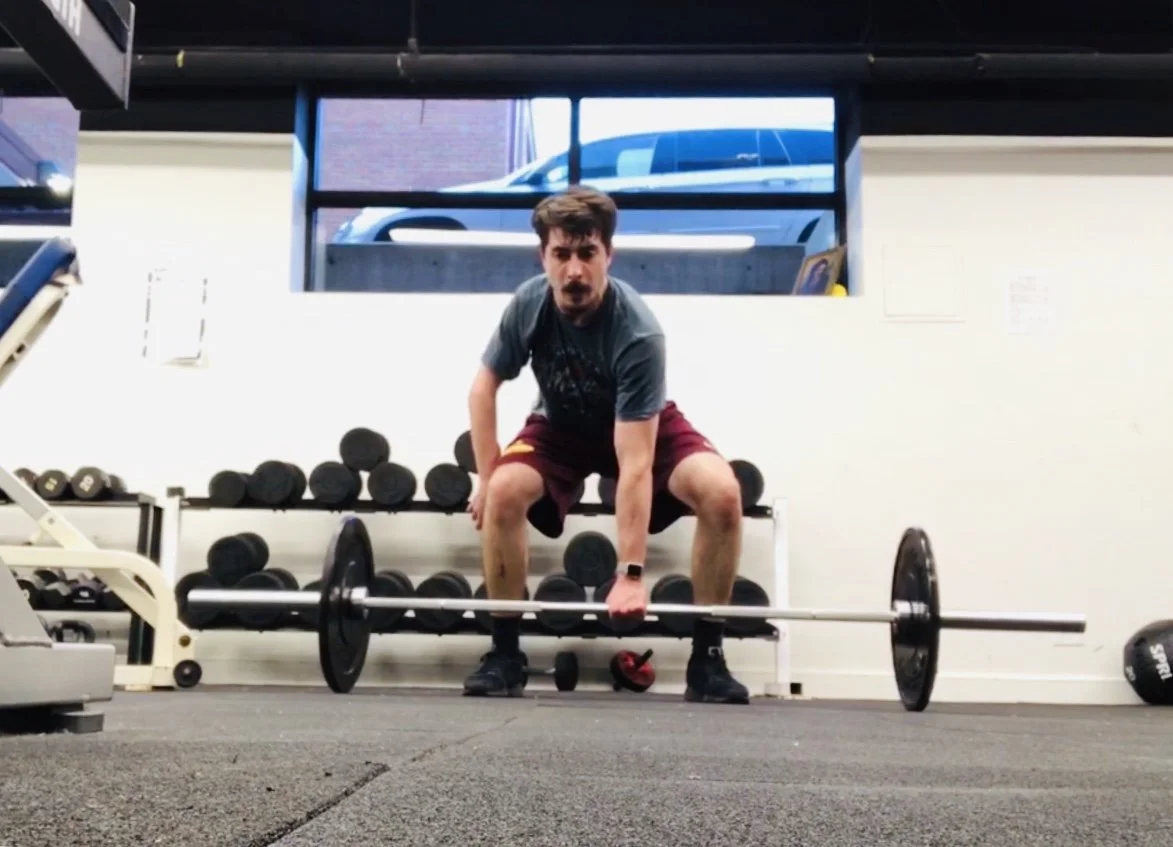
One day, I told Joe that I could not do a one-armed barbell movement. He pulled out his phone and showed me a video of Victor Assaf (now a friend of mine) doing single-arm clean and jerks. “Oh, ok, I guess I can do that,” I said.
I didn’t know it at the time, but I was already doing CrossFit.
After a couple of months, Joe unfortunately injured himself and couldn’t get to the gym. I kept going anyway. I remembered the workouts we’d done and kept repeating them. I loved moving my body in this new way. I could feel my body getting stronger and stronger. I could feel myself becoming more capable, resilient, and cheerful.
If we’re going to stick with anything in life, we have to discover (or learn to) enjoy it.
It’s important to make a note of the quality of my bond with Joe. Joe was my friend. I trusted Joe. I liked Joe. I looked up to Joe. He’s a man of integrity and character and he’s fun to be around. He’s now a father of a big and beautiful family, and his Christmas card is on my refrigerator. He’s a great dude. When he said, “Let’s go to the gym,” I listened. I implicitly assumed whatever workout he’d suggest was the best. I just happened to love the methodology behind those workouts: CrossFit.
CrossFit started as a website. People all over the world would check out this website for workout ideas and to be part of this new movement. The book, “Learning to Breathe Fire,” does a great job of telling that story. Before CrossFit gyms existed, people did CrossFit in their backyards, garages, and public parks. They didn’t need a gym to fall in love. CrossFit is not merely a brand; it’s a methodology: “constantly varied functional movements performed at high intensity.”
Why does this matter for adaptive athletes?
Two big reasons: 1) you need time and space to develop the concept of adapting workouts, and 2) you need one-on-one feedback on how to adapt and modify. By “feedback,” I don’t mean quality judgments like “good” or “bad.” I mean more of a “how does this look? Help me see what you’re seeing.” And that takes a friendly or helpful eye and voice. It’s hard to grow on your own sometimes.
To be human is to compare. Modifying or adapting inherently involves comparison. And for many with disabilities, comparing is complicated and hard to do. You need time and experience to wrap your head around new ways of thinking and moving your body. And you need help. We all need help.
Do CrossFit. Fall in love with it. Then join a gym.
